A safe return home begins before the ride leaves the hospital.
Confirm what changed, what help is needed on day one, which equipment must already be in place, and who to call when the written plan and the real home do not match.
 Written and reviewed by Nicola Davidson, OTR/LLicensed occupational therapist
Published July 14, 2026
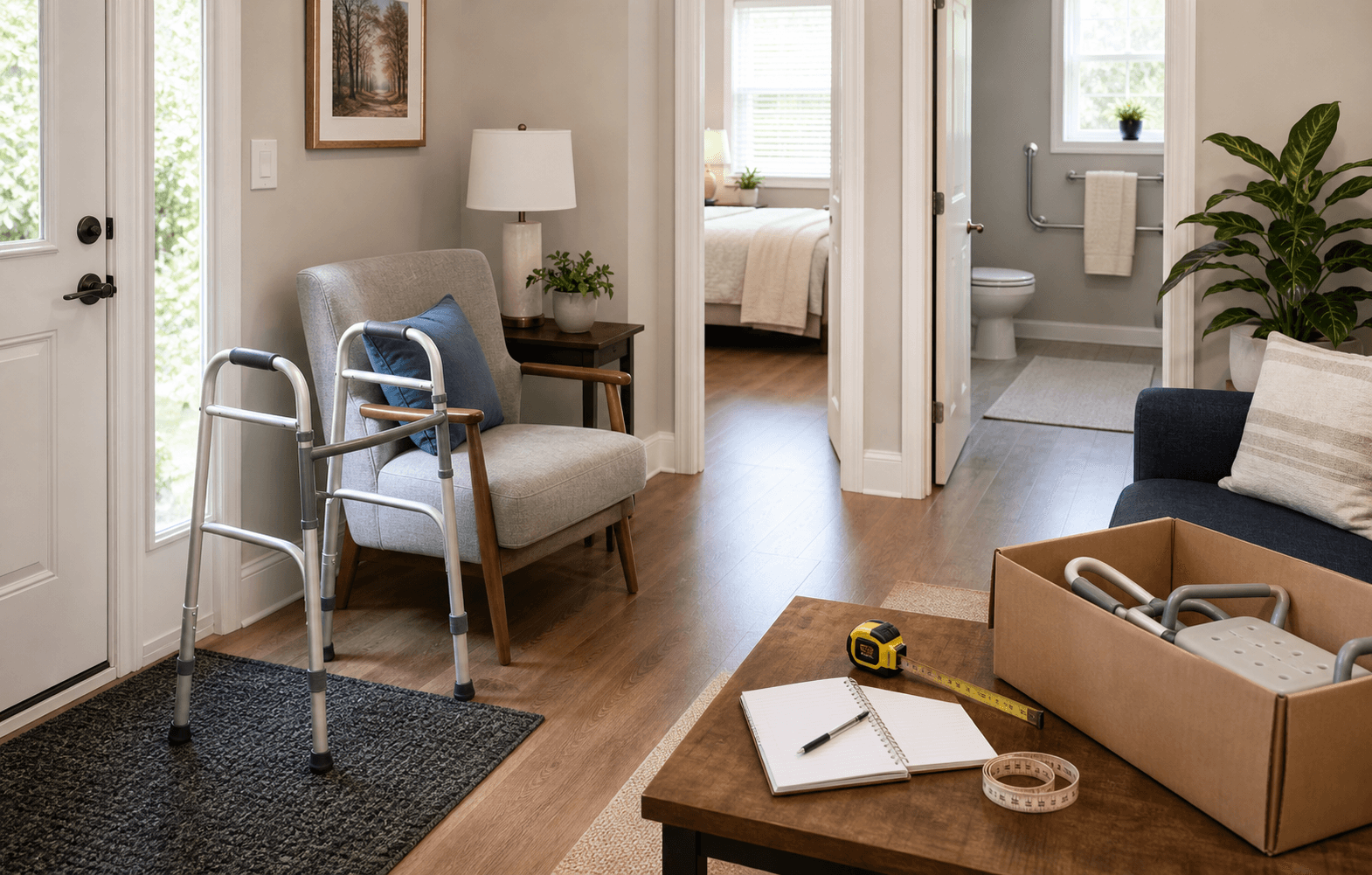
Hospital discharge can compress a week of family decisions into a few hours. A parent may be medically ready to leave while the front steps, toilet height, medication list, and evening coverage are still unsettled. The safest return home is built around the first day’s unavoidable routines, not a hope that the household will work them out after arrival.
In brief
The main points
- 01Ask the discharge team what the person can safely do now—not only what they could do before admission.
- 02Get a complete medicine list, follow-up appointments, warning signs, and contact numbers in writing.
- 03Have essential equipment, a clear route, meals, transportation, and caregiver coverage ready before arrival.
- 04If the person cannot complete the planned transfer or routine safely, call the discharge contact or health care provider for guidance.
Ask what help is needed during the first 24 hours
Clarify walking, stairs, toileting, bathing, dressing, meals, medications, and getting in and out of bed or a chair. Ask whether the person needs hands-on help, supervision, reminders, or a device. A phrase such as ‘up with assistance’ should be translated into what a family member is actually expected to do.
Tell the team about stairs, narrow doors, the bathroom layout, bedroom location, pets, and who will be present. If the discharge plan assumes support the family cannot provide, say so before leaving.
Leave with the clinical plan in writing
Use the CMS discharge planning checklist to confirm diagnoses, medicine changes, follow-up appointments, equipment, services, warning signs, and who to call. Compare the new medicine list with what is already at home and ask what should be stopped, started, or changed.
- Written medicine list and a plan for obtaining the first doses
- Follow-up appointments, transportation, and required records
- Wound, diet, activity, or symptom instructions in plain language
- Orders or referrals for equipment, home health, therapy, or other care
- A daytime and after-hours contact for questions
Prepare one safe route and one workable routine
The whole home does not need to be finished before discharge, but the person needs a safe way in, a place to sleep, a toileting plan, and access to food, fluids, medicines, and a phone. Clear the entry and main route, place lighting, and confirm that any device fits the person and the space.
Avoid buying multiple items based only on a diagnosis. Equipment should match current ability, body size, the exact transfer, and the home. Ask a qualified clinician when fit or technique is uncertain.
Use the first days to test the plan—not the person
Track what takes longer, where help is heavier than expected, whether the person is eating and taking medicines as planned, and whether pain, fatigue, confusion, or shortness of breath is changing. Share concerns promptly with the appropriate health care contact.
A family should not compensate indefinitely for a discharge plan that is not workable. Ask for reassessment when the person’s function or available support does not match the plan.
Emergency symptoms come first
Follow the discharge instructions and call emergency services for serious or rapidly worsening symptoms. Home setup guidance does not replace medical advice after hospitalization.
Sources and further reading
These links lead to the health, Medicare, and Wisconsin information used here. Check the original source for the latest safety, coverage, and eligibility details.
Keep planning
Related family guides
Medicare and home health
Medicare Home Health and Occupational Therapy
Coverage depends on the person’s eligibility, a qualifying plan of care, and care from a Medicare-certified home health agency. Private home planning and general household help are different services.
Read guideAfter a fall
What to Do After an Older Parent Falls
A fall can be a medical event, a home warning, or both. Use a calm sequence: check for urgent danger, get appropriate help, record what happened, and reduce the chance of the same situation repeating.
Read guideCare needs
How Much Help Does an Aging Parent Need?
A useful care estimate is more specific than a few hours a week. It names which daily activities need setup, reminders, supervision, hands-on help, or skilled care—and who can reliably provide it.
Read guide