After a parent falls, first protect the person—then learn from what happened.
A fall can be a medical event, a home warning, or both. Use a calm sequence: check for urgent danger, get appropriate help, record what happened, and reduce the chance of the same situation repeating.
 Written and reviewed by Nicola Davidson, OTR/LLicensed occupational therapist
Published July 14, 2026
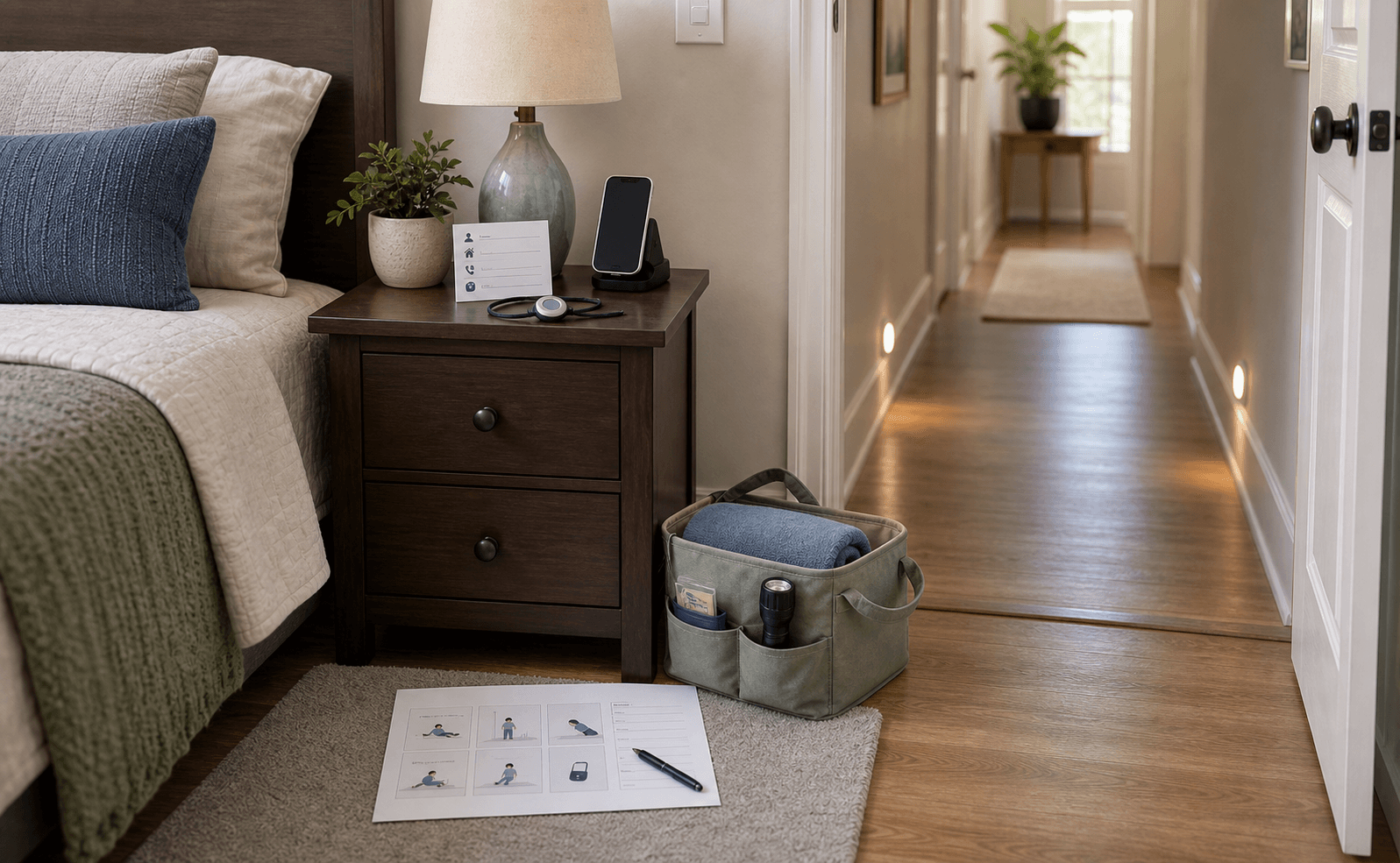
After a fall, a family’s attention tends to split in two. One part is watching the person—pain, confusion, movement, the possibility of injury. The other is scanning the room for an explanation. Both matter, but they belong in that order: protect the person first, then reconstruct what the home and the routine can teach you.
In brief
The main points
- 01Do not rush to lift someone who may be injured or cannot safely move.
- 02Call emergency services for serious symptoms, a possible head or hip injury, or any uncertainty about immediate safety.
- 03Tell the person’s health care provider about the fall even if there is no obvious injury.
- 04Record the location, time, activity, footwear, symptoms, and what the person remembers.
Check for danger before trying to move
Encourage the person to pause and breathe. Ask where they hurt and whether they hit their head, feel dizzy, have new weakness, or cannot move a limb normally. If there may be a serious injury, keep them comfortable and call emergency services instead of trying to pull them up.
The National Institute on Aging advises getting help after a fall and telling a doctor what happened. A person who feels able to rise should still move slowly and use a stable surface; if there is doubt, wait for trained help.
Call 911 for urgent concerns
Seek emergency help for loss of consciousness, a head strike with concerning symptoms, severe pain, visible deformity, heavy bleeding, chest pain, trouble breathing, sudden weakness, or inability to get up safely.
Write down the story while it is still clear
The phrase ‘lost balance’ is usually not enough to guide prevention. Record what the person was doing just before the fall, the direction they moved, whether they felt lightheaded, what they were wearing, and what they reached for. Note any recent illness, medication change, poor sleep, or reduced food and fluid intake to discuss with the health care team.
- Exact room and location, including the surface and lighting
- Time of day and whether the person had just stood up
- Shoes, socks, slippers, or bare feet
- Mobility aid used, left behind, or placed out of reach
- Pain, dizziness, urgency, distraction, or carrying
Arrange medical follow-up and a fall-risk review
A clinician can consider injuries that are not immediately obvious and review factors such as medicines, blood pressure changes, vision, foot problems, strength, balance, and health conditions. Bring the written fall story and a complete medication list, including nonprescription medicines and supplements.
Ask whether occupational therapy, physical therapy, home health, or another local service is appropriate. Coverage and eligibility vary, so confirm benefits rather than assuming a particular service is covered.
Make the first home change match the fall
If the fall happened on the way to the bathroom, improve the night path and plan for urgency. If it happened while standing from a chair, look at seat height, support, footwear, and the person’s ability—not just the rug nearby. If it happened at the entry, address the landing, rail, threshold, weather plan, and what the person was carrying.
Choose the first two or three changes, then review the setup again after the medical picture is clearer. A fall should not automatically trigger a full remodel, but it should not be dismissed as a one-time accident either.
Sources and further reading
These links lead to the health, Medicare, and Wisconsin information used here. Check the original source for the latest safety, coverage, and eligibility details.
Keep planning
Related family guides
Room-by-room checklist
Fall Prevention Home Checklist
Walk the routes used every day, notice where balance or effort changes, and separate what can be fixed now from what needs a clinician, installer, or larger decision.
Read guideNight path safety
Nighttime Bathroom Safety for Older Adults
Nighttime safety depends on the whole route: getting upright, finding light and footwear, using a mobility aid, reaching the bathroom, and returning to bed without rushing.
Read guideHospital discharge
Coming Home From the Hospital Checklist
Confirm what changed, what help is needed on day one, which equipment must already be in place, and who to call when the written plan and the real home do not match.
Read guide