Design the home for the abilities the person has now, then review it as needs change.
Dementia can affect judgment, memory, depth perception, sequencing, and response to unfamiliar items. A safer home reduces avoidable demands while preserving familiar routines and dignity.
 Written and reviewed by Nicola Davidson, OTR/LLicensed occupational therapist
Published July 14, 2026
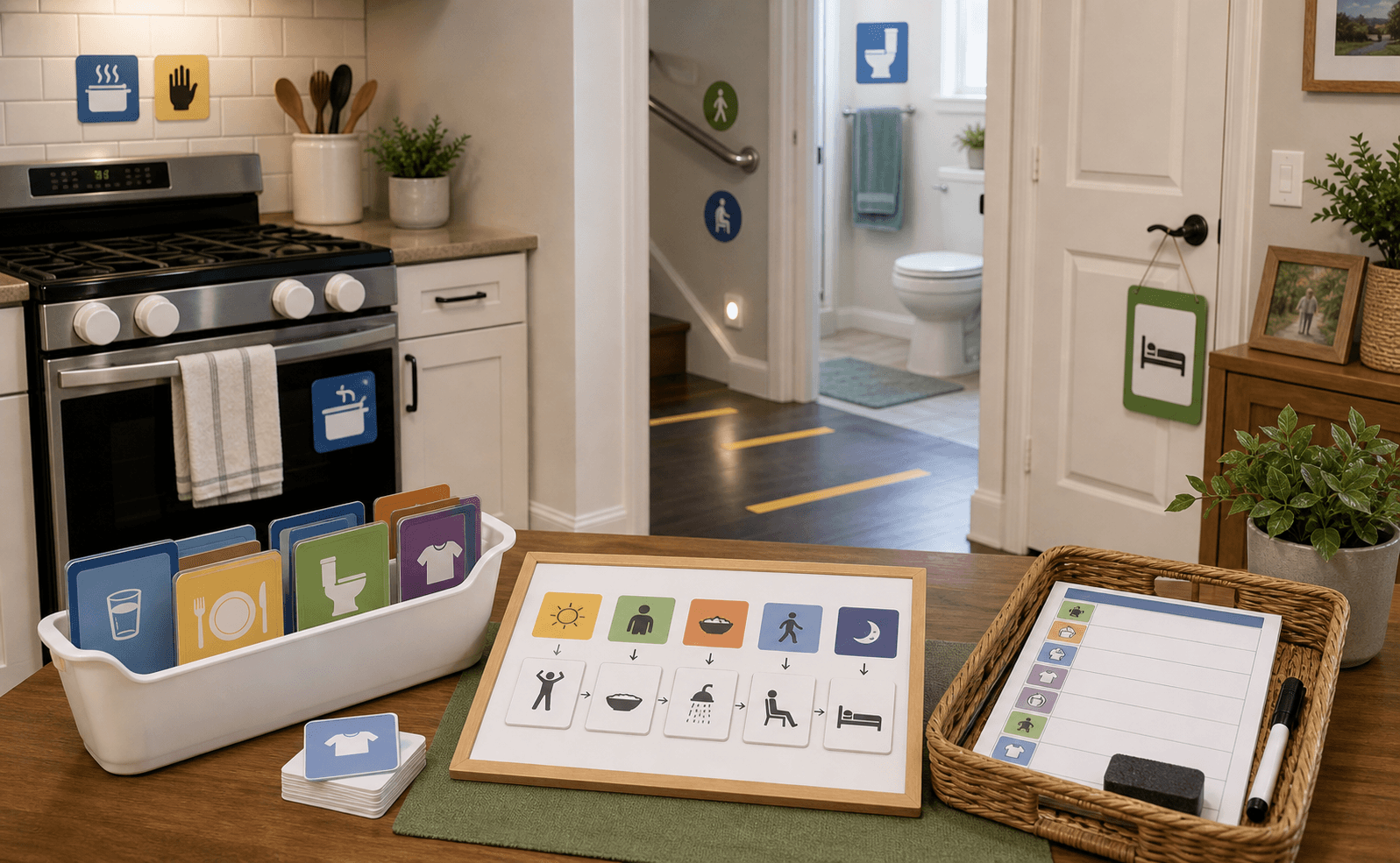
A familiar home can be reassuring and still become difficult to read. A dark rug may look like a hole, a bathroom door may disappear into the hallway, and a routine completed for decades may lose one essential step. Good dementia safety changes reduce the amount of figuring out the home requires without stripping away everything familiar.
In brief
The main points
- 01Address immediate dangers such as unsafe exits, medicines, firearms, appliances, and toxic products first.
- 02Use simple, consistent cues and keep important daily items visible without creating clutter.
- 03Review lighting, shadows, glare, and floor patterns that may be misinterpreted.
- 04Plan for caregiver relief and increasing supervision before the current arrangement reaches a crisis.
Remove immediate dangers without making the home unrecognizable
The National Institute on Aging recommends a room-by-room review and attention to immediate hazards. Secure medicines, cleaning products, weapons, tools, and car keys as appropriate. Check smoke and carbon monoxide alarms and keep emergency numbers available.
Make one change at a time when possible and observe the result. A sudden, complete rearrangement can increase confusion. Preserve familiar furniture and routines when they are still safe.
Reduce the thinking required for essential routines
Keep the path to the bathroom clear, make the toilet easy to identify, lay out clothing in order, and use simple labels or pictures when they help. Store rarely used items out of sight so the needed choice is easier to find.
- Consistent place for glasses, hearing aids, mobility aid, phone, and keys
- Simple instructions with one step at a time
- Lighting that reduces shadows and glare, especially at night
- Contrasting edges where helpful, avoiding busy floor patterns
Plan for exits, wandering, and a missed connection
Ask the health care team about wandering risk and appropriate identification or alert options. Keep a recent photo and important information available. Door changes should balance safety with emergency exit requirements and must not create a fire hazard or trap the person inside.
Create a response plan with neighbors or local family who can help. Call 911 when the person is missing and immediate safety is at risk; do not wait to begin the response.
Increase support when cueing is no longer enough
If the person is leaving appliances on, missing essential medicines, wandering, falling, resisting necessary care, or awake unsafely at night, the need may be supervision rather than another reminder. Review the complete day and night schedule and the caregiver’s ability to sustain it.
Sudden or rapidly worse confusion can have a medical cause and needs prompt evaluation. A home checklist should not be used to explain away an abrupt change.
Keep dignity in the plan
Use the least restrictive change that addresses the real risk, include the person in choices as much as possible, and preserve activities they can still do safely.
Sources and further reading
These links lead to the health, Medicare, and Wisconsin information used here. Check the original source for the latest safety, coverage, and eligibility details.
Keep planning
Related family guides
Night path safety
Nighttime Bathroom Safety for Older Adults
Nighttime safety depends on the whole route: getting upright, finding light and footwear, using a mobility aid, reaching the bathroom, and returning to bed without rushing.
Read guideCare needs
How Much Help Does an Aging Parent Need?
A useful care estimate is more specific than a few hours a week. It names which daily activities need setup, reminders, supervision, hands-on help, or skilled care—and who can reliably provide it.
Read guideCaregiver support
Caregiver Burnout Warning Signs and Next Steps
Exhaustion, poor sleep, anger, isolation, hopelessness, missed health care, and unsafe lifting are signs to change the plan—not evidence that a caregiver is failing.
Read guide