Make the safe choice the easiest choice before anyone gets out of bed.
Nighttime safety depends on the whole route: getting upright, finding light and footwear, using a mobility aid, reaching the bathroom, and returning to bed without rushing.
 Written and reviewed by Nicola Davidson, OTR/LLicensed occupational therapist
Published July 14, 2026
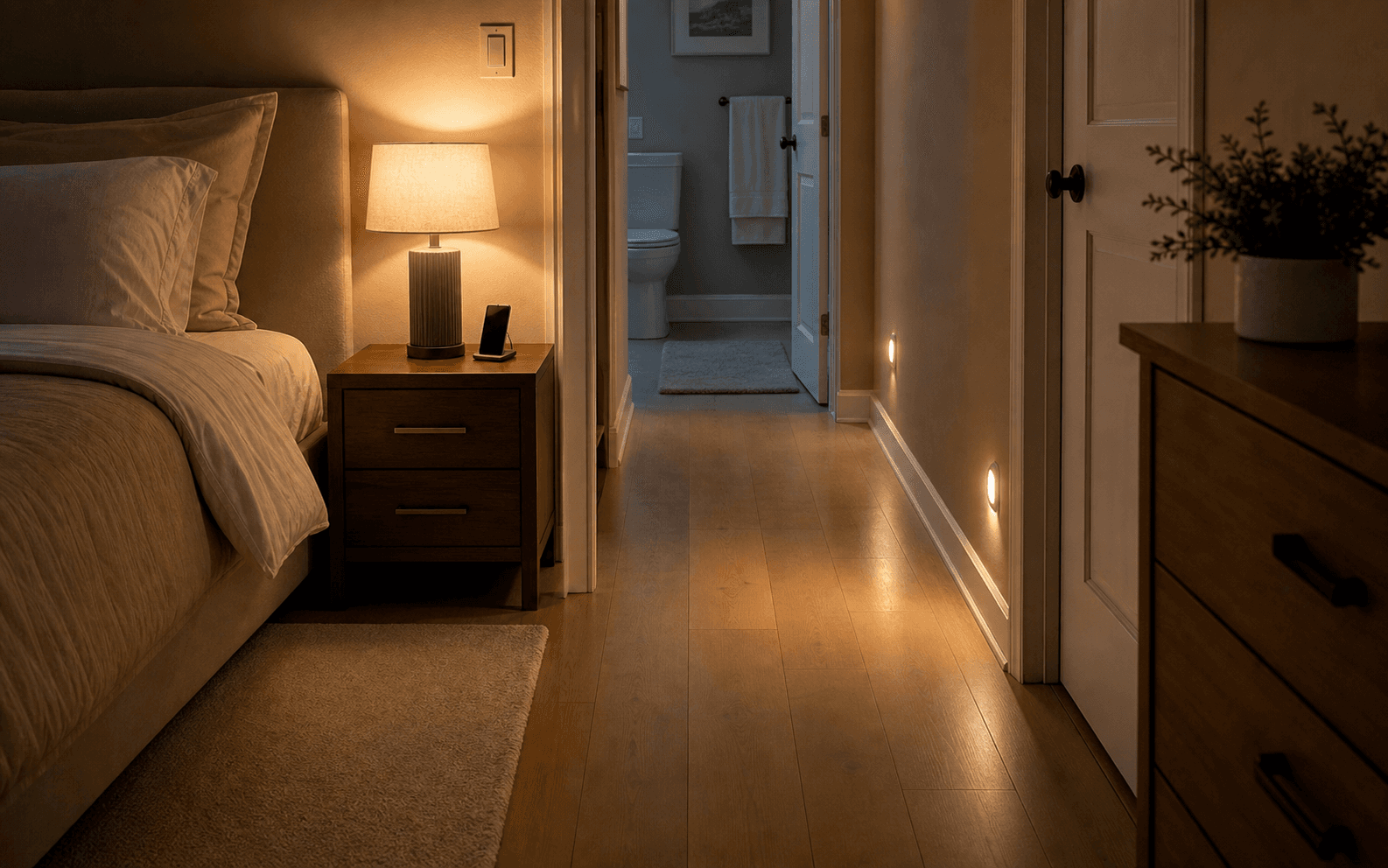
At two in the morning, even a familiar hallway asks more of a person. Eyes are adjusting, blood pressure may be changing after standing, the bathroom feels urgent, and the walker may be just out of reach. Night safety improves when the route is designed for that half-awake moment rather than for how the room looks during the day.
In brief
The main points
- 01Place lighting where it can be turned on before standing and along the full route.
- 02Keep the correct mobility aid, glasses, phone, and secure footwear within easy reach.
- 03Remove cords, loose mats, narrow furniture gaps, and items that change position overnight.
- 04Discuss new nighttime frequency, dizziness, confusion, or urgency with the person’s health care provider.
Begin at the bedside
The first risky moment may happen before the person reaches the hallway. Check whether they sit long enough to feel steady, whether feet reach the floor, and whether the light, glasses, footwear, and mobility aid are in consistent positions. Avoid placing a walker where the person must lean or twist to reach it.
A motion light can help, but it should not create glare or leave dark gaps. The person should be able to see the floor and identify furniture edges without walking toward a harsh light source.
Clear and light the complete route
Walk from the usual side of the bed to the toilet and back. Look for cords, pet items, bedding, baskets, doors, rugs, and furniture that narrow the path. If a mobility aid is used, confirm that turns and doorways allow it to stay with the person.
- Use low, even lighting at the bed, along the route, and inside the bathroom.
- Secure or remove mats that slide, curl, or interrupt a mobility aid.
- Keep the bathroom door easy to open and the switch easy to reach.
- Choose footwear with a secure fit rather than loose backless slippers.
Plan for urgency instead of relying on willpower
Telling someone not to rush does not solve a routine driven by urgency. Make the route shorter and simpler, review the timing of evening routines with the health care team when appropriate, and consider whether a bedside toileting option needs professional fit and placement guidance.
A commode or other bedside option is not automatically safer. The person still needs a reliable transfer, stable placement, adequate space, hygiene support, and a plan for emptying and cleaning.
Treat a change in nighttime function as new information
New confusion, repeated urgency, dizziness on standing, pain, or a sudden increase in nighttime trips may reflect a health issue. Record what changed and contact the person’s health care provider. Home changes can reduce exposure while the cause is evaluated, but they should not replace that evaluation.
Review after every near-fall
A stumble, furniture grab, or abandoned mobility aid is useful evidence. Adjust the route before waiting for an injury.
Sources and further reading
These links lead to the health, Medicare, and Wisconsin information used here. Check the original source for the latest safety, coverage, and eligibility details.
Keep planning
Related family guides
Bathroom safety
Bathroom Safety for Aging Parents
The right setup depends on the person, the surface, the direction of movement, the space available, and whether help is present—not on a generic bathroom shopping list.
Read guideRoom-by-room checklist
Fall Prevention Home Checklist
Walk the routes used every day, notice where balance or effort changes, and separate what can be fixed now from what needs a clinician, installer, or larger decision.
Read guideDementia home safety
Dementia Home Safety Checklist
Dementia can affect judgment, memory, depth perception, sequencing, and response to unfamiliar items. A safer home reduces avoidable demands while preserving familiar routines and dignity.
Read guide