A safe entry needs a landing, a support, and a plan for what the person is carrying.
Stair and entry safety is more than adding a rail. Review the approach, door, threshold, weather, lighting, pace, and the tasks that compete for the person’s hands.
 Written and reviewed by Nicola Davidson, OTR/LLicensed occupational therapist
Published July 14, 2026
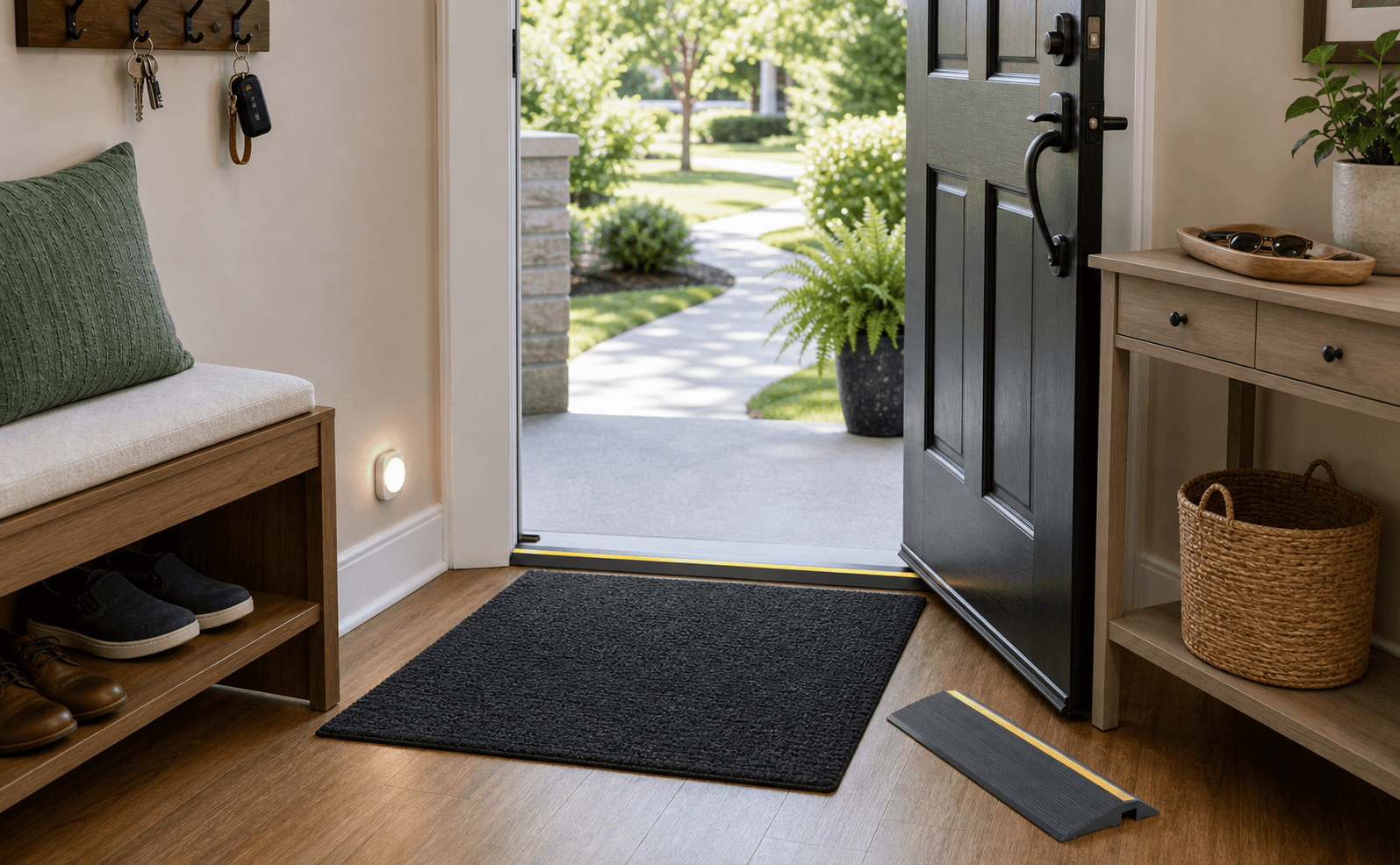
The difficult part of an entry is sometimes not the step. It is the package in one hand, the key in the other, the storm door pulling back, or the small landing that leaves nowhere to place a walker. The whole approach matters, especially in Wisconsin weather, when a manageable route can change overnight.
In brief
The main points
- 01Check whether a sturdy, graspable rail is available through the full change in level.
- 02Provide even lighting and clear visual information at the first and last step.
- 03Create a place for packages, keys, and bags so hands can stay available for support.
- 04In Wisconsin, name who clears snow and ice and what happens if that person is unavailable.
Watch the complete approach
Begin at the sidewalk, driveway, or garage—not at the first step. Notice uneven surfaces, drainage, clutter, lighting, and whether the person must unlock or pull a door while standing on a small landing. A mobility aid needs enough stable space before the person changes level or handles the door.
- Stable path with no rocking pavers, loose cords, or changing obstacles
- Landing large enough for feet, mobility aid, door swing, and a helper if needed
- Threshold that is visible and manageable in both directions
- A consistent place to set down mail, groceries, or packages
Make rails and steps easy to use
A rail should be secure, easy to grasp, and available where support is needed. Review whether it begins before the first step and continues past the last. On interior stairs, the person may need support on both sides, particularly when strength or balance differs by side.
Lighting should show each tread and the top and bottom clearly without glare. Contrast at a change in level can help visibility, but busy patterns can make depth harder to judge for some people.
Remove carrying from the stair routine
Laundry, meals, pets, and household supplies often make a familiar staircase unsafe. Move frequently used items to the main level when possible, use smaller loads, or assign the carrying task to someone else. A rail cannot help if both hands are full.
If a person avoids a floor because of stairs, treat that as information about the home’s fit. Reorganizing a routine may be more useful than encouraging more stair trips.
Write a weather plan before winter
Decide who monitors conditions, removes snow, treats ice, and checks that the route stays clear. Include a backup person and a delivery plan for days when the entry should not be used. Keep treatment supplies accessible to the helper without asking the older adult to cross the hazard to reach them.
When to seek an assessment
New difficulty with stairs, breathlessness, pain, weakness, or repeated missteps should be discussed with the person’s health care provider. An occupational or physical therapy assessment may help determine whether the routine, technique, support, or living arrangement needs to change.
Sources and further reading
These links lead to the health, Medicare, and Wisconsin information used here. Check the original source for the latest safety, coverage, and eligibility details.
Keep planning
Related family guides
Room-by-room checklist
Fall Prevention Home Checklist
Walk the routes used every day, notice where balance or effort changes, and separate what can be fixed now from what needs a clinician, installer, or larger decision.
Read guideWisconsin aging in place
Aging in Place in Wisconsin
The home, climate, family map, available services, health needs, and older adult’s preferences all shape whether staying home can work safely and sustainably.
Read guideHospital discharge
Coming Home From the Hospital Checklist
Confirm what changed, what help is needed on day one, which equipment must already be in place, and who to call when the written plan and the real home do not match.
Read guide