The exact bathroom transfer matters more than a generic shopping list.
The right setup depends on the person, the surface, the direction of movement, the space available, and whether help is present—not on a generic bathroom shopping list.
 Written and reviewed by Nicola Davidson, OTR/LLicensed occupational therapist
Published July 2, 2026
Updated July 14, 2026
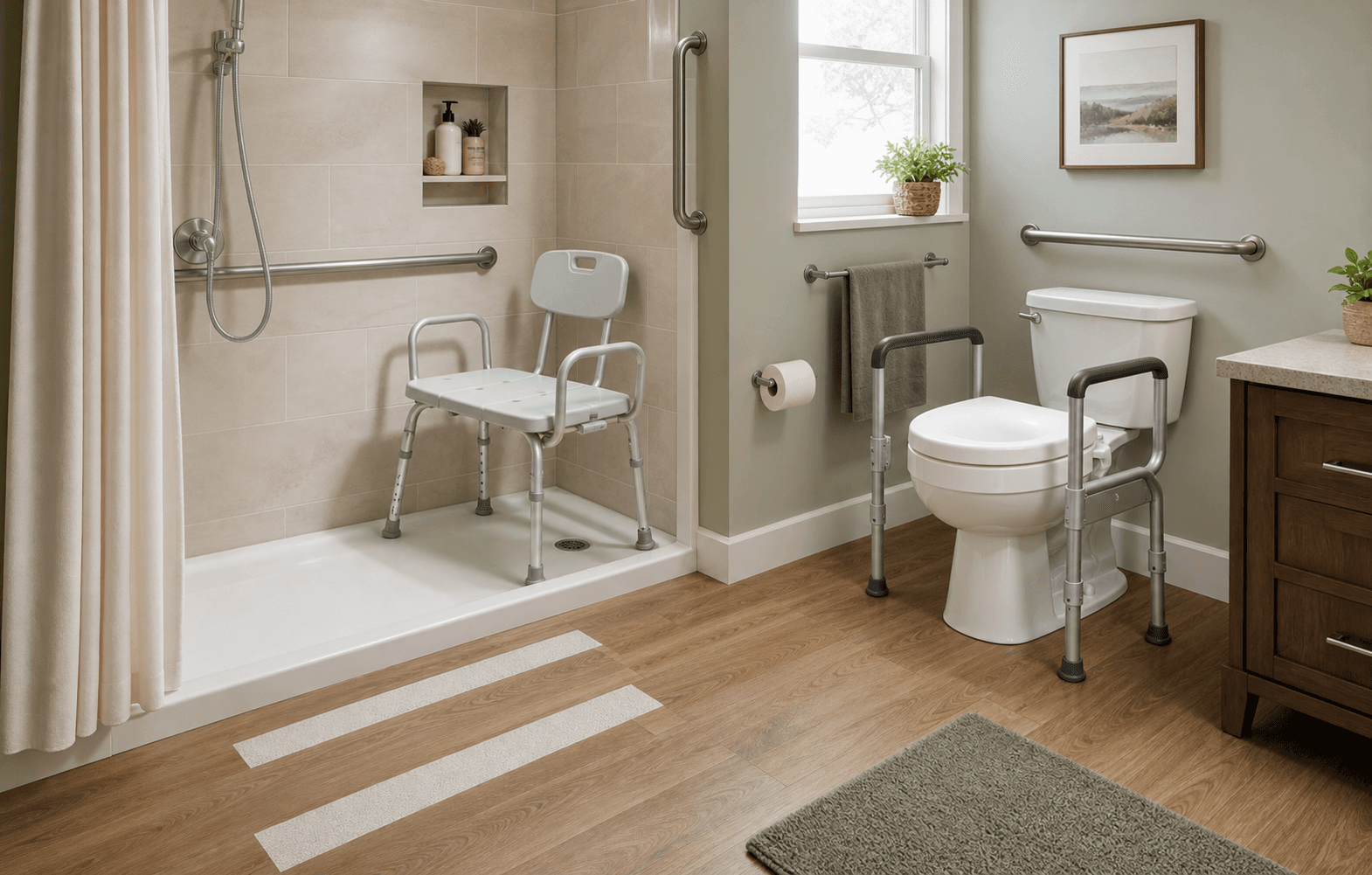
A bathroom can look perfectly ordinary in daylight and become the hardest room in the house during a rushed morning. The useful question is not whether the room has a grab bar. It is what happens at the precise moment a parent turns, steps over an edge, lowers to a seat, or reaches for support.
In brief
The main points
- 01Watch how the person approaches, turns, steps, sits, stands, and manages clothing or water controls.
- 02A towel bar and a suction handle are not substitutes for a properly selected and installed fixed support.
- 03Measure the space and confirm fit before buying a shower seat, toilet aid, or transfer device.
- 04New weakness, dizziness, pain, or repeated near-falls needs clinical attention as well as a room change.
Observe the routine before choosing equipment
Ask the person to describe the hardest moment: stepping over the tub wall, lowering to the toilet, standing after a shower, reaching a towel, or managing clothing while keeping balance. If it is safe to observe, notice which hand reaches for support and whether the person can place both feet securely before turning.
A recommendation that ignores the direction of movement or the person’s mobility aid can put a useful item in the wrong place. Photos and measurements help, but pain, weight-bearing limits, and a changing transfer may require an in-person occupational or physical therapy assessment.
Review support, surfaces, space, and visibility
Think in four layers. Support means a stable place to hold during the hardest part of the transfer. Surfaces should reduce slipping without creating curled edges. Space must allow feet, knees, a walker, or a helper to be positioned safely. Visibility includes night lighting, contrast, and controls that can be reached without leaning.
- Confirm whether walls and anchoring can support the selected grab-bar location.
- Keep soap, towels, and controls within reach from the position in which they are used.
- Check door swing and whether it could block a helper from entering after a fall.
- Use a stable, properly fitted seat only when it matches the transfer and weight capacity needed.
Give a contractor a specific question
A useful request names the location, the routine, the likely support direction, and the need to confirm anchoring. Ask the installer to state the product, wall condition, anchoring method, placement, repair needs, and total scope. If the requested placement cannot be anchored safely, the family should know before installation begins.
Avoid asking only for a senior bathroom or a grab bar somewhere near the shower. The work should be connected to the transfer the person needs to complete.
When bathroom difficulty signals a larger care need
If bathing is regularly skipped, the person cannot reach the toilet in time, a helper is lifting more than they can safely manage, or transfers are changing quickly, hardware alone may not solve the problem. The family may need personal-care help, a clinical assessment, a different bathing routine, or a temporary plan while health concerns are evaluated.
Safety boundary
Do not ask a family caregiver to practice a transfer that feels unsafe. Seek local professional help when the person cannot reliably bear weight, follow directions, or use the planned support.
Sources and further reading
These links lead to the health, Medicare, and Wisconsin information used here. Check the original source for the latest safety, coverage, and eligibility details.
Keep planning
Related family guides
Grab bar planning
Grab Bar Placement for Older Adults
Placement should match where support is needed, which hand can use it, how the person moves, and what the wall can safely hold.
Read guideNight path safety
Nighttime Bathroom Safety for Older Adults
Nighttime safety depends on the whole route: getting upright, finding light and footwear, using a mobility aid, reaching the bathroom, and returning to bed without rushing.
Read guideRoom-by-room checklist
Fall Prevention Home Checklist
Walk the routes used every day, notice where balance or effort changes, and separate what can be fixed now from what needs a clinician, installer, or larger decision.
Read guide