The best grab bar location follows the transfer—not a stock bathroom picture.
Placement should match where support is needed, which hand can use it, how the person moves, and what the wall can safely hold.
 Written and reviewed by Nicola Davidson, OTR/LLicensed occupational therapist
Published July 14, 2026
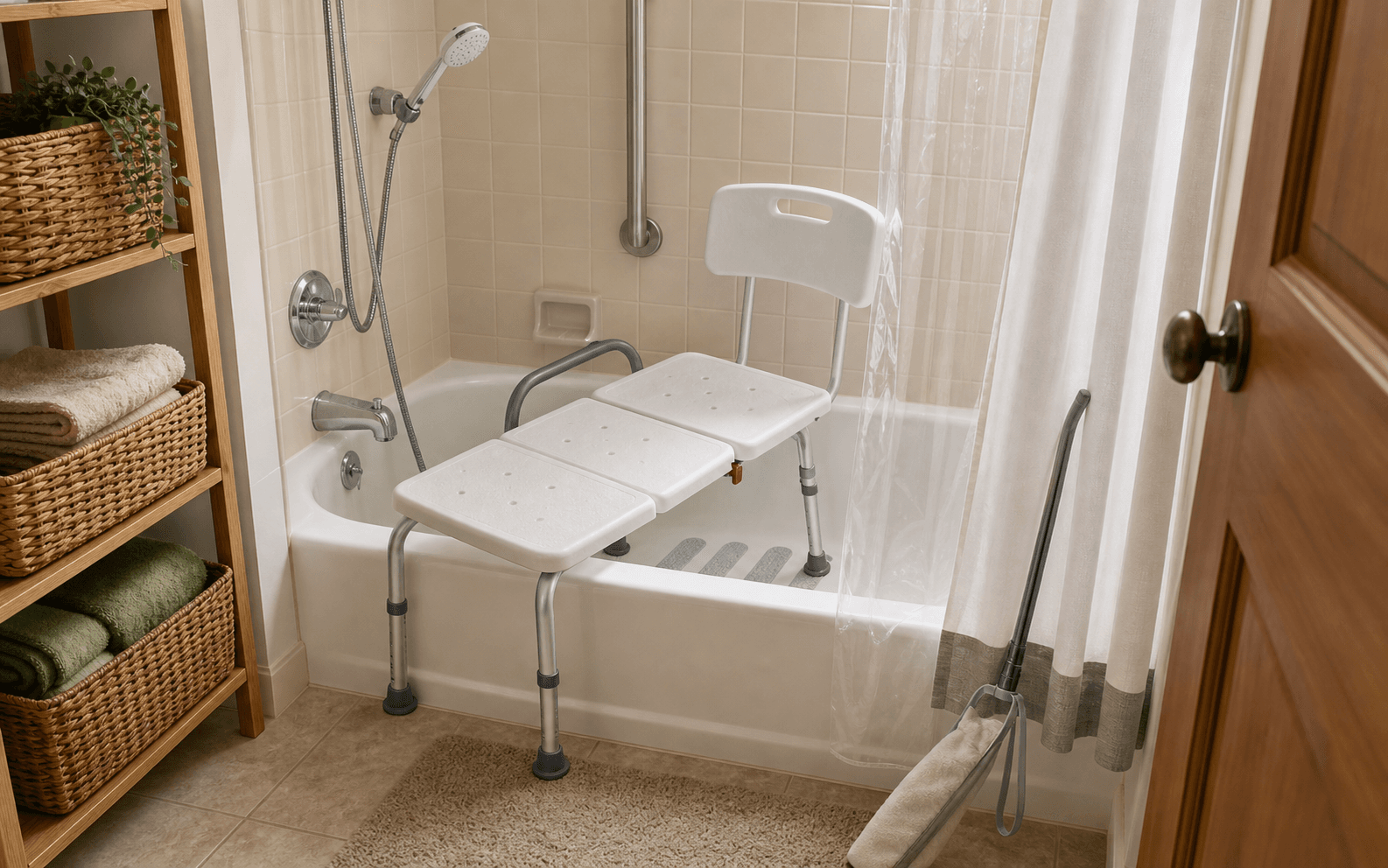
A grab bar can be beautifully installed and still be almost useless. If it sits behind the hand that needs it, begins after balance is already challenged, or cannot be reached from the transfer position, the problem is not the quality of the hardware. It is that placement was decided before the movement was understood.
In brief
The main points
- 01Identify the hardest phase of the movement before marking a wall.
- 02Confirm wall construction and an appropriate anchoring method with a qualified installer.
- 03Do not treat towel bars or suction-mounted handles as equivalent to fixed, properly installed grab bars.
- 04Changing strength, pain, cognition, or weight-bearing can change the right setup.
Match support to a specific movement
A person may need support while stepping over a tub wall, lowering to a seat, standing from the toilet, or turning after a shower. Those are different movements. Note the starting position, direction of travel, stronger side, available reach, and where both feet can be placed.
If the person needs another person to lift, has new weight-bearing restrictions, cannot follow the transfer sequence, or is becoming less steady, seek an in-person assessment before relying on new hardware.
Choose shape and orientation after the need is clear
Horizontal, vertical, angled, and combination bars support different phases of movement. A vertical bar may offer a range of hand heights during entry, while a horizontal bar can support sideways movement or controlled lowering. The right choice depends on the person and the exact surface—not a universal height copied from the internet.
- Can the person reach the bar before balance is challenged?
- Can the wrist and hand grasp it comfortably?
- Will soap, doors, curtains, or fixtures interfere with use?
- Does the bar support both entry and exit, or is another support needed?
Make anchoring part of the written scope
Ask the installer to identify wall construction, the selected bar, fasteners or anchoring system, placement, and any repair work. The finished installation should follow product instructions and applicable requirements. A family should not assume that tile, appearance, or a firm tug proves adequate anchoring.
If the preferred location cannot be supported, pause and reconsider the transfer rather than moving the bar to a convenient but unusable location.
Review the complete setup after installation
A bar can be secure and still be a poor fit if the floor slips, the shower seat is too low, the walker has nowhere to go, or towels require an unsafe reach. Review the full sequence with water controls, clothing, mobility aid, and caregiver position included.
Installation is only one layer
Clinical guidance helps choose how the person should move. A qualified installer determines how the selected support can be securely attached to the home.
Sources and further reading
These links lead to the health, Medicare, and Wisconsin information used here. Check the original source for the latest safety, coverage, and eligibility details.
Keep planning
Related family guides
Bathroom safety
Bathroom Safety for Aging Parents
The right setup depends on the person, the surface, the direction of movement, the space available, and whether help is present—not on a generic bathroom shopping list.
Read guideRoom-by-room checklist
Fall Prevention Home Checklist
Walk the routes used every day, notice where balance or effort changes, and separate what can be fixed now from what needs a clinician, installer, or larger decision.
Read guideStairs and entry
Stair and Entryway Safety for Older Adults
Stair and entry safety is more than adding a rail. Review the approach, door, threshold, weather, lighting, pace, and the tasks that compete for the person’s hands.
Read guide